

There’s a certain kind of magic to tench fishing on a warm, still morning. The birds are just starting to stir, mist clings low to the surface, and every fizz or flicker on the water sets your pulse racing. You know the tench are there—bold-bodied, red-eyed, and moving slow but deliberate beneath the surface.
But catching big tench isn’t about luck. It’s about reading the water, getting your tactics right, and above all, staying patient. These fish are cautious, often feeding softly and sporadically, and the angler who succeeds is the one who stays sharp even when things look still. Tench fishing rewards a measured approach and punishes the heavy-handed. But when it all comes together, and that float lifts with purpose, it’s something special.
Timing It Right
Tench are at their most active from late spring through to the early autumn months, with early mornings and late evenings providing the best opportunities. These feeding windows are when tench cruise the margins and shallows in search of natural food. A quiet approach, timed well, can make the difference between a blank and a red-letter session.
It pays to observe the water first. Look for telltale signs—streams of bubbles rising from the bottom, flat spots in the ripple, or subtle swirls around reed beds. These aren’t random. They’re signals. Tench love areas with soft silt, patches of gravel, and weed beds where naturals gather. Finding one of these clear "tench holes" can be half the battle.
Presentation Is Everything
When it comes to float fishing for tench, subtlety is key. Big tench won’t crash into a clumsily presented bait. They want it natural, slow, and just right. That’s why your float choice matters.
The conditions can change quickly—flat calm one minute, a breeze the next. That’s where having a selection of assorted floats comes in handy. A delicate insert float might be spot-on for glassy water, while a more robust waggler can punch out to distance if fish are holding back. Having different styles and sizes in your armoury lets you adapt to light levels, wind strength, and swim depth—all crucial for spotting those tiny lift bites or subtle line dips that tench are known for.
It’s often those moments of stillness—just a gentle rise of the float stem or a hesitant shimmy—that signal a fish is mouthing your bait. Miss it, and you’ll be left wondering. Read it right, and you're into a battle with a chunky, stubborn fighter.
The Stealthy Approach: Baiting with Precision
Baiting strategy is just as important as rig choice. On pressured venues or shallow margins, overdoing it with noise or volume can push the fish away before you even start.
That’s why a quiet, precise approach often works best—and nothing delivers particles to the lakebed quite like a bait dropper. Using a teardrop bait dropper, you can lay down a compact bed of hemp, corn, chopped worm or caster right on the deck, exactly where you want it, with minimal disturbance. No splashes, no plumes—just an accurate little parcel of food right where the tench want it.
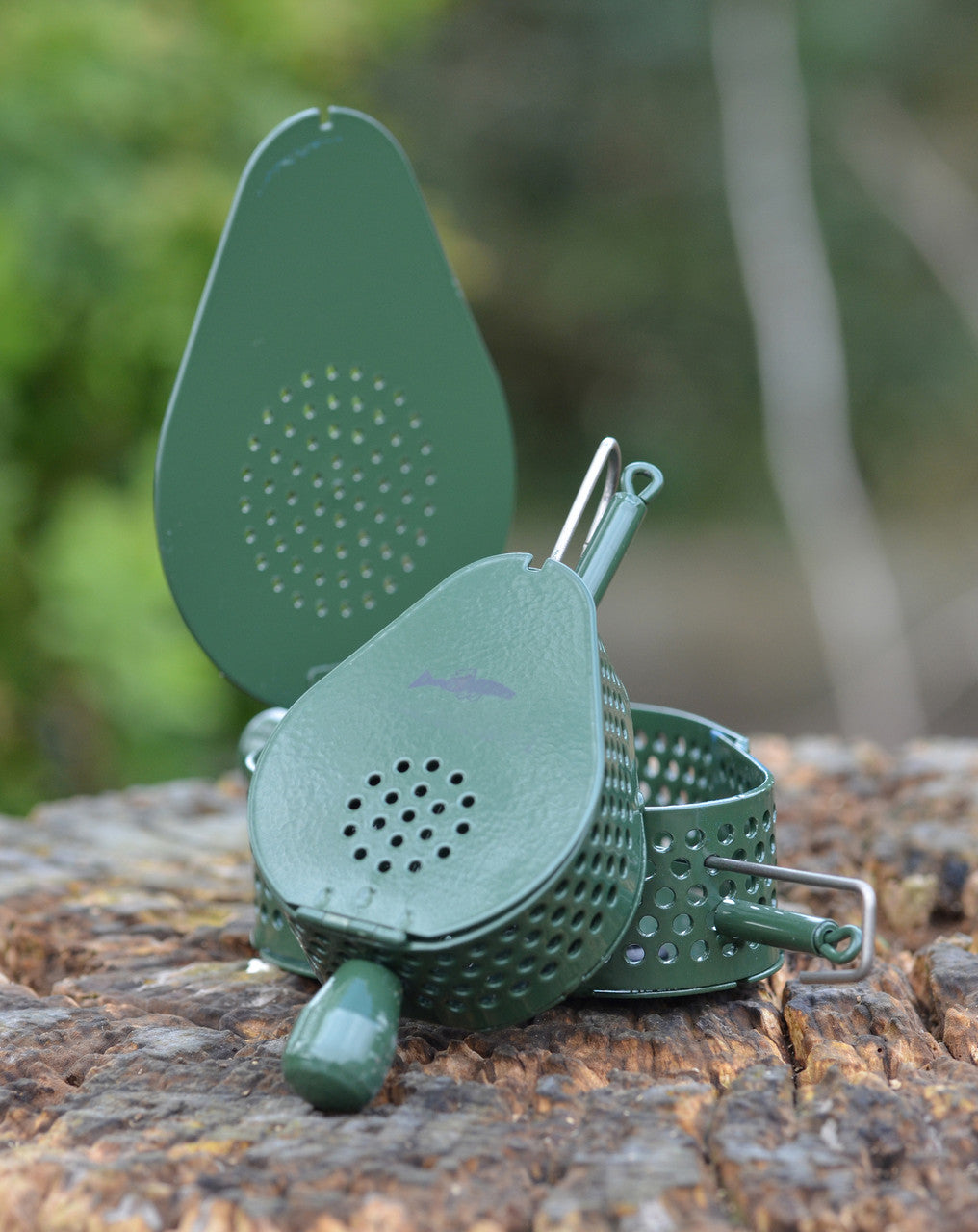
This method is especially useful when targeting tight clear spots among weed, or if you’re fishing close to features like lily pads or reed beds. You can build a swim steadily, drop by drop, encouraging the fish to settle over your bait without alerting the whole lake to your presence.
Bait Choice & Behaviour
Tench are suckers for natural baits—worms, maggots, casters, sweetcorn, and hemp all work brilliantly, either as loose feed or hookbait. The trick is often to offer something they’re familiar with in a way that’s just a bit different.
Baits with visual appeal can help. A single grain of sweetcorn standing out among hemp, or a worm tail gently wriggling on the bottom, can tempt even the wariest fish. It’s also worth mixing particle sizes and textures in your feed to hold the fish longer. Chopped worm and caster is a classic combo for a reason—it creates scent, movement, and variety.
A Morning to Remember

I still remember a session last June that perfectly captured what tench fishing is all about. The forecast said calm and overcast, so I got to the lake just after 4:30am, hot brew in hand and the mist just starting to lift off the water. I crept quietly down to a swim I’d pre-baited the evening before, a small clearing between lily pads and a gravel patch I’d found with a lead. No other anglers in sight—just the gentle hum of early morning birdsong and the promise of something special.
I started by quietly laying down a tight bed of hemp, caster and chopped worm—no crashing spombs, just subtle, precise baiting in about four feet of water, using a bait dropper. Then I set up a float, carefully balanced for sensitivity, and placed it just off the baited patch.
It wasn’t long before a string of tiny bubbles danced across the surface. The float twitched once… twice… then lifted an inch before sliding away. I struck and instantly felt that slow, deliberate resistance that only a big tench gives. It hugged the bottom, ploughed into the weed, and gave me a real arm-aching battle on balanced gear. Eventually, I slid the net under a thickset tench, easily over 7lb—bright red eyes and bristling with attitude.
Over the next few hours, I had three more—all taken just inches off the baited spot. No alarms, no heavy gear—just float fishing, finesse, and that classic tension in the air as you wait for the next bite. That session reminded me why I love tench fishing so much. It’s not just the fish. It’s the process, the patience, the moments of calm interrupted by sudden, unforgettable action.
And if you’ve never experienced that lift bite before—you’re in for a real treat.